 EN
EN


Modern travelers face mounting challenges with airline baggage restrictions and increasingly strict weight limits. The stress of standing at check-in counters, watching nervously as airline staff weigh your luggage, has become an all-too-familiar experience. A reliable luggage scale emerges as an essential travel companion, transforming uncertainty into confidence and helping avoid costly overweight baggage fees that can exceed hundreds of dollars on international flights.
The aviation industry has witnessed dramatic changes in baggage policies over the past decade, with airlines implementing stricter weight limits and higher penalty fees. What once was a minor inconvenience has evolved into a significant travel expense, making weight management tools increasingly valuable. Business travelers, vacation enthusiasts, and international jet-setters alike recognize that preparation prevents both financial surprises and travel delays.
Understanding the importance of accurate baggage weight measurement extends beyond mere convenience. Professional travelers invest in quality measurement tools to maintain control over their travel expenses and ensure seamless airport experiences. The investment in a reliable weighing device pays dividends through avoided fees, reduced stress, and enhanced travel planning capabilities.
Understanding Modern Airline Weight Restrictions
Evolution of Baggage Policies Across Airlines
Airlines worldwide have systematically reduced baggage allowances while increasing penalty fees as part of their revenue optimization strategies. Major carriers now enforce weight limits ranging from 20 to 32 kilograms for checked baggage, with some budget airlines implementing even stricter restrictions. These policies reflect the industry's shift toward unbundled pricing models, where previously included services now generate additional revenue streams.
International routes often feature different weight allowances compared to domestic flights, creating confusion for travelers who frequently switch between regional and long-haul journeys. European carriers typically maintain stricter weight limits than their American counterparts, while Asian airlines often provide more generous allowances for business class passengers. Understanding these variations becomes crucial for frequent travelers navigating multiple airline partnerships and alliance programs.
The implementation of dynamic pricing for baggage has further complicated travel planning, with fees varying based on route popularity, seasonal demand, and advance purchase timing. Some airlines charge significantly higher fees for excess weight paid at the airport compared to pre-purchased allowances, emphasizing the importance of accurate pre-travel weight assessment.
Financial Impact of Excess Baggage Charges
Overweight baggage fees represent one of the most expensive travel surprises, with charges ranging from 50 to 200 dollars per kilogram over the allowed limit. European airlines frequently implement particularly steep penalties, with some carriers charging up to 20 euros per kilogram for excess weight. These fees can quickly escalate total travel costs, especially for families or extended vacation trips involving substantial packing requirements.
Business travelers face additional challenges when carrying equipment, samples, or presentation materials that contribute to increased luggage weight. Corporate travel policies may not always cover excess baggage fees, leaving individual travelers responsible for unexpected charges. The cumulative effect of multiple trips with overweight penalties can significantly impact both personal and corporate travel budgets.
Regional variations in fee structures create additional complexity, with some airlines charging flat rates for overweight bags while others implement tiered pricing based on excess weight amounts. Understanding these fee structures helps travelers make informed decisions about packing strategies and potential shipping alternatives for heavy items.
Benefits of Using a Portable Luggage Scale
Preventing Costly Airport Surprises
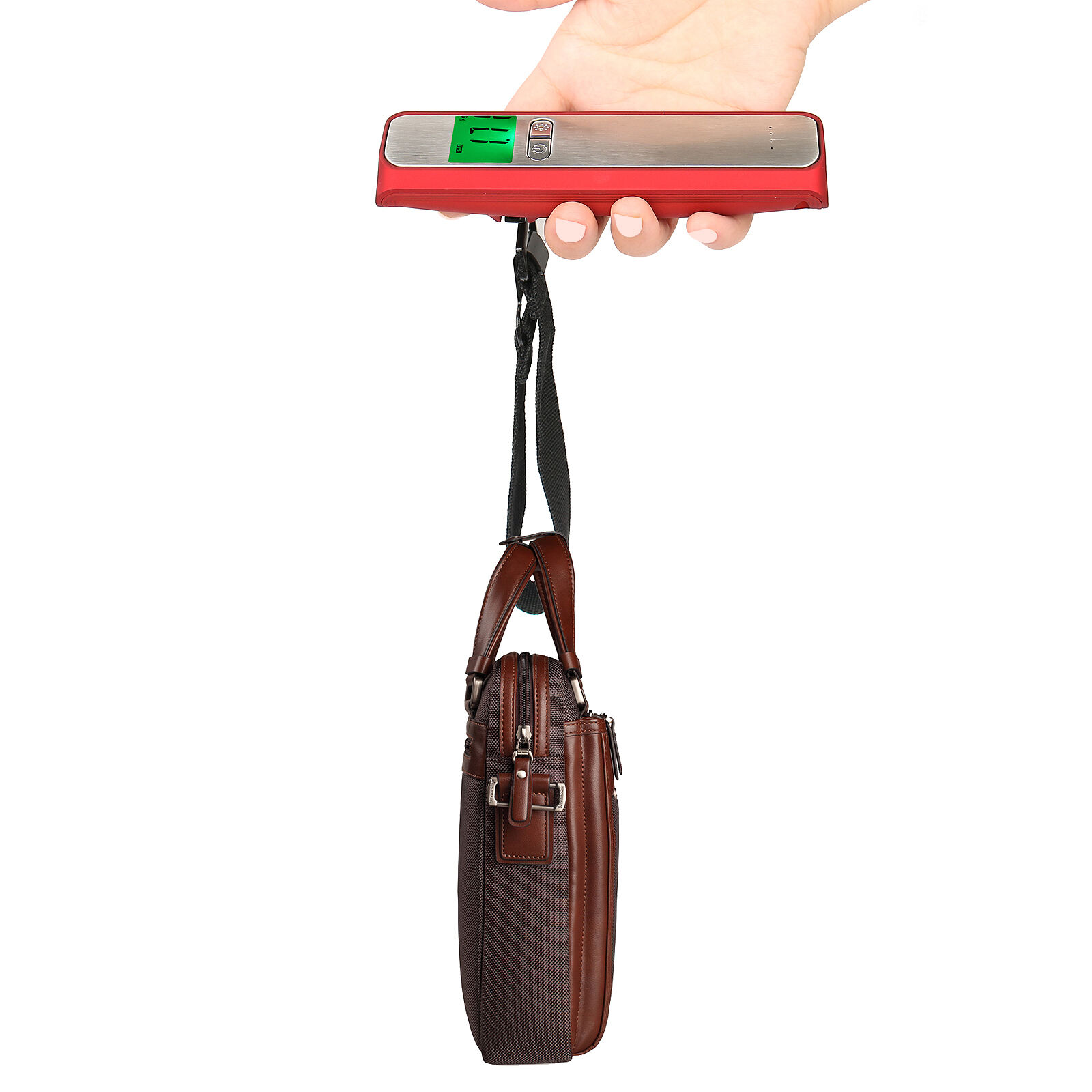
A portable luggage scale eliminates guesswork from travel preparation, providing accurate weight measurements in the comfort of your home or hotel room. This advance knowledge allows travelers to make informed decisions about packing contents, potentially removing or redistributing items before reaching the airport. The ability to verify weight multiple times during packing ensures optimal use of available allowances without exceeding limits.
Airport weight measurements can sometimes vary due to scale calibration differences, but having a baseline measurement from your personal device provides valuable reference points for discussions with airline staff. Some travelers report successfully challenging airport scale readings when their personal measurements significantly differed, though results vary by airline and staff discretion.
The psychological benefit of knowing exact luggage weights cannot be understated, as it eliminates pre-flight anxiety and allows travelers to approach check-in counters with confidence. This peace of mind contributes to more enjoyable travel experiences and reduced stress levels throughout the journey.
Enhanced Packing Efficiency and Organization
Regular use of a luggage scale encourages more strategic packing approaches, helping travelers optimize space and weight distribution across multiple bags. This practice leads to better organization skills and more efficient use of available baggage allowances. Frequent travelers often develop sophisticated packing systems based on weight-to-value ratios for different item categories.
Weight monitoring enables travelers to make informed decisions about souvenir purchases and shopping during trips, ensuring return journeys remain within allowable limits. This capability proves particularly valuable for extended vacations or business trips involving multiple destinations with varying shopping opportunities.
The data collected through consistent weight monitoring helps travelers understand their typical packing patterns and identify opportunities for optimization. This knowledge supports the development of personalized packing checklists and weight budgets for different trip types and destinations.
Types and Features of Modern Luggage Scales
Digital vs Analog Scale Technologies
Digital luggage scales dominate the current market due to their superior accuracy, ease of reading, and advanced features. These devices typically provide weight measurements in multiple units, including pounds, kilograms, and stones, accommodating travelers familiar with different measurement systems. LCD displays offer clear readouts even in low-light conditions, while some models include backlighting for enhanced visibility.
Analog scales, while less common, still appeal to travelers who prefer mechanical reliability and battery-free operation. These traditional scales use spring mechanisms to indicate weight through needle positions on graduated dials. However, analog models generally offer lower precision and can be more difficult to read accurately, especially for precise weight management near airline limits.
Modern digital scales often incorporate smart features such as memory functions, automatic shut-off, and tare capabilities that allow weighing of luggage contents without including the bag weight. Some advanced models connect to smartphone applications for weight tracking and travel planning assistance.
Key Features for Optimal Travel Use
Portability remains the primary consideration for travel-oriented luggage scales, with successful designs balancing accuracy with compact size and lightweight construction. The best travel scales weigh less than 200 grams while maintaining measurement accuracy within 0.1-kilogram precision ranges. Ergonomic handle designs and secure attachment mechanisms ensure comfortable operation and reliable connections to luggage handles.
Battery life considerations significantly impact user experience, with quality scales providing hundreds of measurements on single battery charges. Some innovative models eliminate battery requirements entirely through mechanical energy conversion or solar charging capabilities, appealing to environmentally conscious travelers and those seeking maximum reliability.
Durability features such as impact-resistant housings and water-resistant designs protect devices during travel and storage. Quality construction ensures consistent performance across varying environmental conditions and handling situations commonly encountered during travel.
Best Practices for Accurate Weight Measurement
Proper Measurement Techniques
Achieving accurate luggage weight measurements requires attention to proper technique and environmental factors that can influence scale performance. Position luggage on stable, level surfaces away from drafts or vibrations that might affect readings. Hold the scale handle vertically and lift smoothly to avoid sudden jerking motions that can cause measurement fluctuations.
Allow luggage to hang freely without touching floors, walls, or other surfaces that could provide partial support and reduce apparent weight. Take multiple measurements and calculate averages to improve accuracy, especially when weights approach airline limits. Environmental factors such as temperature and humidity can affect electronic components, so allow devices to acclimate to room conditions before use.
Regular calibration checks using known weights help maintain measurement accuracy over time. Some scales include built-in calibration functions, while others may require professional calibration services for optimal performance. Document calibration dates and procedures to track device reliability and identify potential accuracy degradation.
Maximizing Luggage Weight Allowances
Strategic weight distribution across multiple bags can help travelers maximize total carrying capacity while staying within individual bag limits. Understanding airline policies for carry-on versus checked baggage enables optimization of weight allocation based on item priorities and access requirements during travel.
Wearing heavier items rather than packing them reduces luggage weight while maintaining personal comfort during travel. This technique proves particularly effective for boots, heavy coats, and electronic devices that contribute significantly to baggage weight. However, consider security screening requirements and comfort implications for extended travel periods.
Utilizing packing cubes and compression techniques can redistribute weight more evenly while improving organization and accessibility. These methods often reveal opportunities to eliminate unnecessary items or consolidate duplicated functions across multiple products.
Integration with Modern Travel Planning
Technology Integration and Smart Features
Contemporary luggage scales increasingly incorporate smart technology features that enhance their utility beyond simple weight measurement. Bluetooth connectivity allows synchronization with smartphone applications that track weight history, calculate remaining allowances, and provide packing suggestions based on destination and trip duration. These applications often include airline-specific weight limits and fee calculators to support informed travel decisions.
Cloud-based data storage enables access to weight information across multiple devices and locations, supporting collaborative travel planning for families or business groups. Some applications integrate with airline booking systems to automatically import baggage allowances and provide personalized packing recommendations based on ticket types and routes.
Advanced models feature voice announcements and multilingual displays to accommodate international travelers and accessibility requirements. These inclusive design elements demonstrate the evolution of simple measurement tools into comprehensive travel assistance devices.
Supporting Sustainable Travel Practices
Accurate weight management contributes to sustainable travel practices by encouraging efficient packing and reducing unnecessary transportation loads. Airlines benefit from improved fuel efficiency when passengers consistently meet weight targets, while travelers develop more mindful consumption habits regarding travel purchases and packing decisions.
Long-term use of personal luggage scales reduces reliance on airport services and contributes to smoother check-in processes that benefit all travelers. This efficiency improvement supports airport operations and reduces environmental impacts associated with delayed flights and operational complications.
The investment in quality measurement tools aligns with circular economy principles by extending the useful life of luggage through better care and organization. Proper weight management reduces stress on luggage components and helps maintain structural integrity over extended use periods.
FAQ
How accurate are portable luggage scales compared to airport scales?
Quality portable luggage scales typically maintain accuracy within 0.1 to 0.2 kilograms, which is comparable to many airport scales. However, airport scales undergo regular professional calibration and certification, potentially offering slightly higher precision. The key advantage of personal scales lies in providing consistent reference measurements that help travelers understand their luggage weights relative to airline limits, even if minor variations exist between different measuring devices.
Can luggage scales be used for other weighing purposes during travel?
Most luggage scales can effectively weigh packages, shopping bags, backpacks, and other items up to their maximum capacity, typically ranging from 40 to 50 kilograms. This versatility makes them useful for shipping purchases home, weighing sports equipment, or managing carry-on bag weights. However, avoid using travel scales for precision applications requiring laboratory-grade accuracy, as they are optimized for portable convenience rather than scientific measurement standards.
Do luggage scales require special maintenance or care during travel?
Luggage scales require minimal maintenance but benefit from proper storage in protective cases to prevent damage to displays and moving parts. Keep electronic models away from extreme temperatures and moisture, and remove batteries during extended storage periods to prevent corrosion. Periodically clean the device with soft, damp cloths and avoid harsh chemicals or abrasive materials that might damage housings or displays.
Are there legal restrictions on carrying luggage scales in different countries?
Luggage scales face no specific legal restrictions in most countries and are generally permitted in both carry-on and checked baggage. However, some security agencies may require additional screening of electronic scales, particularly models with complex displays or wireless capabilities. Always declare electronic devices when requested and consider carrying user manuals or product documentation to facilitate security screening processes if questions arise about device functions.